




Training has been part of this studio since our earliest years. We teach one-on-one, run team workshops and build structured courses in brand identity, graphic design, mobile design and video editing. Some of it happens for clients at handover. Some of it happens for people who simply want to learn the craft.
One thing we noticed early: many people who want to learn design do not own a laptop, but almost all of them own a phone. So we started teaching on the device people already have.
Why a phone is a serious tool
Phone apps have quietly become capable design tools. Vector Ink, for example, gives you real vector drawing, snapping, a grid, import and export, all on a screen that fits in a pocket. The limits are real, a small screen and a finger instead of a mouse, but the principles of good design do not change with the device. Alignment, hierarchy, contrast and restraint work the same on a phone as on a desktop.
Teaching on a phone also removes an excuse. If the tool is already in your hand, the only thing left between you and practice is time.
How the course is built
The Vector Ink course is structured in three units, with one lesson per feature. It starts where every beginner starts: what the homescreen does, how to install fonts and how to create, save and exit projects. Then it moves into the tools that make precise work possible: snapping and the document, the grid, copy and paste, import and export. Later lessons cover the top bar, the control and options bar, and the selection tool in two parts.
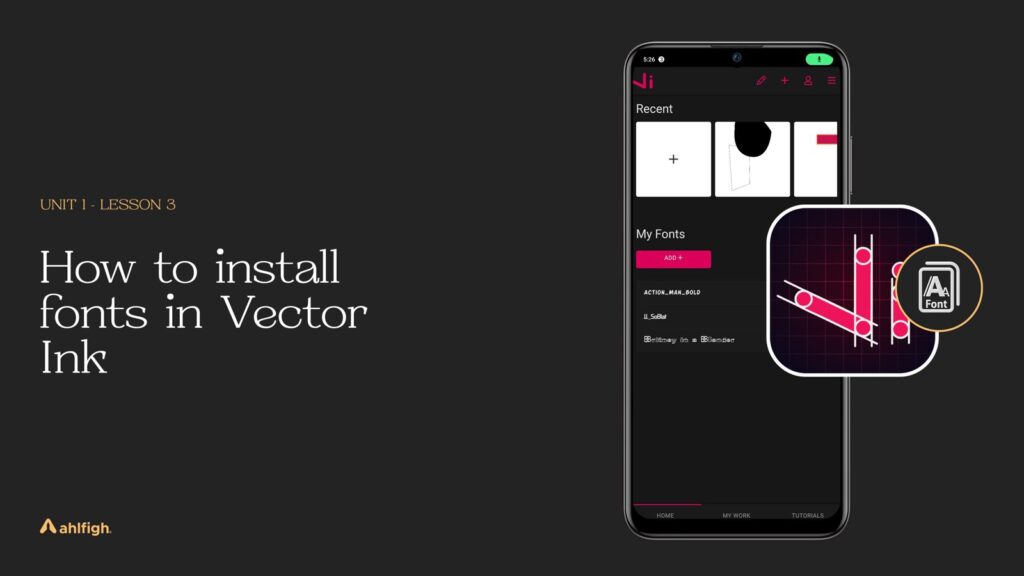
One feature per lesson is a deliberate choice. Short, focused lessons are easier to follow on a phone and easier to rewatch, and they let a student practise one thing properly before moving on. Each lesson has its own title card and a screen recording, so students can see exactly where to tap.

Practice beats watching
Watching a lesson is not the same as learning it. Every lesson in the course is short enough to watch once and then repeat straight away on your own phone, with the app open beside it. The order is deliberate too. You learn to save your work before you learn the clever tools, and you learn the grid and snapping before you try to draw a logo. A beginner who skips those basics usually ends up with designs that look almost right but never quite line up.
Our classes in brand identity and graphic design follow the same idea. Students learn the reasoning first, the mind map, the moodboard and the sketch, and only then the tool. The tool changes every few years. The reasoning does not.
What students tell us
The most useful feedback is about what changed for the student. One client who has learned with us since the A Digitals days put it plainly.
“They don’t just deliver and stop there, they make sure you are okay with the deliveries. When it comes to their courses, it’s exceptional: come see how a smartphone is used to design and edit videos.”
John Boadah, client and student since the A Digitals days
The same idea works inside companies. When we trained the team at Carlos Pharmaceuticals, the goal was not to turn staff into designers. It was to let them produce everyday materials that stay true to the brand.
When the class ends
A course ends. Learning should not. That is why we started Design Altitude, a community for designers who have passed through our classes, so they can keep learning, share their work and take part in design challenges after the last lesson.
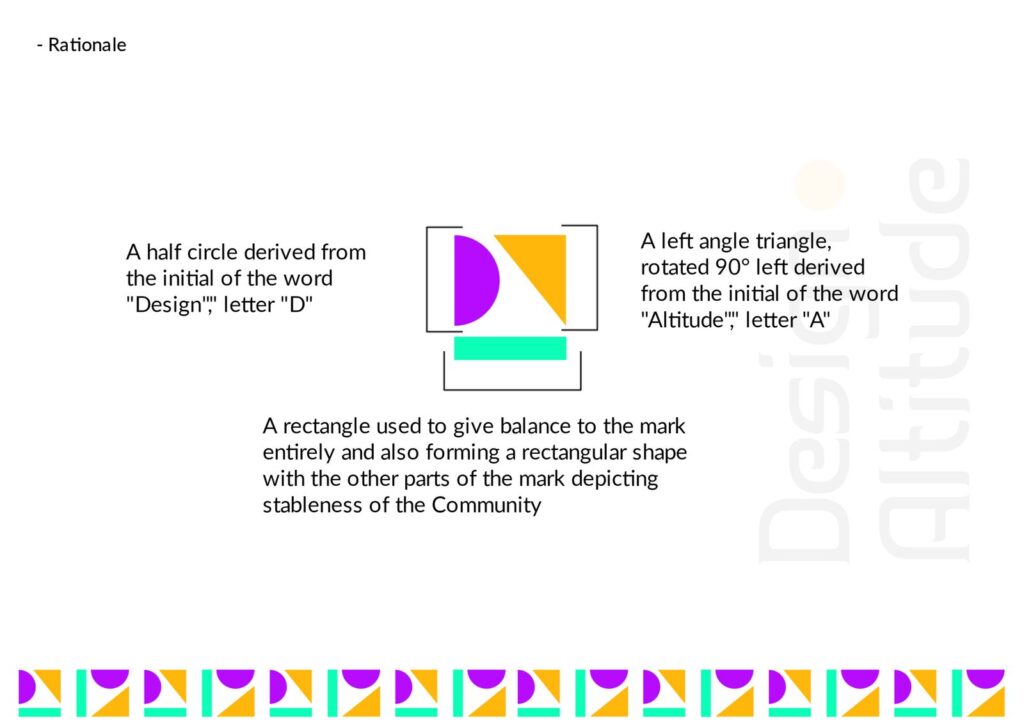
We gave the community its own identity. A half circle from the D and a rotated triangle from the A sit on a stable base: the community holding its members up. A bright four-colour palette turns the mark into a pattern for posters, merchandise and events. One of its first posters said it in three words: we keep learning.

If you want to learn
Training also runs beyond our own courses. We have tutored brand identity for the InnerCircle by Miunify track and run web-design bootcamps. If you are a beginner, start with the tool you already own and learn one feature properly before the next. If you lead a team, ask your designers to teach at handover, so the brand outlives the project.
And if you would like to learn with us, our Creative training practice lists what we teach, from one-on-one mentorship to structured courses.
